

Gold and Chains
Travel Report and Reflections on the Potala Palace, the 50-yuan note, and the true meaning of liberation in Tibet

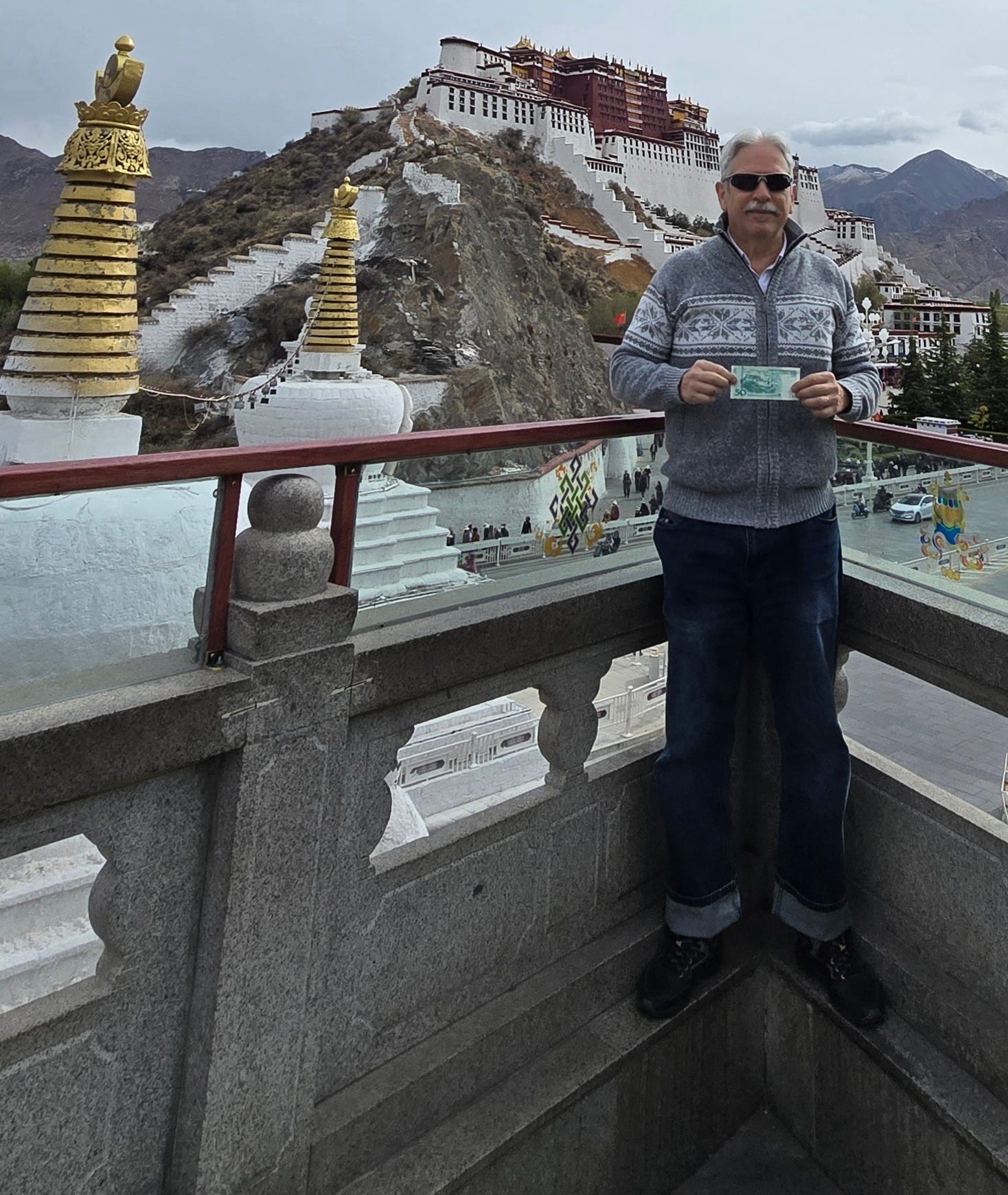
In front of the Potala Palace in Lhasa (photo Felix Abt)
Inside the Potala Palace — the former winter residence of 14 Dalai Lamas and a well-known image on the 50-yuan note — golden treasures worth billions sparkle. The sight takes your breath away. Yet at the same time, a shadow falls over the heart.
The images from the history museum were still too vivid in my mind: barefoot serfs whose lives counted for nothing in this merciless cold. People who could be bought, sold, and humiliated whenever their owners wished. Between this “sacred” gold and the suffering of these people lies an abyss that is almost unbearable to contemplate.
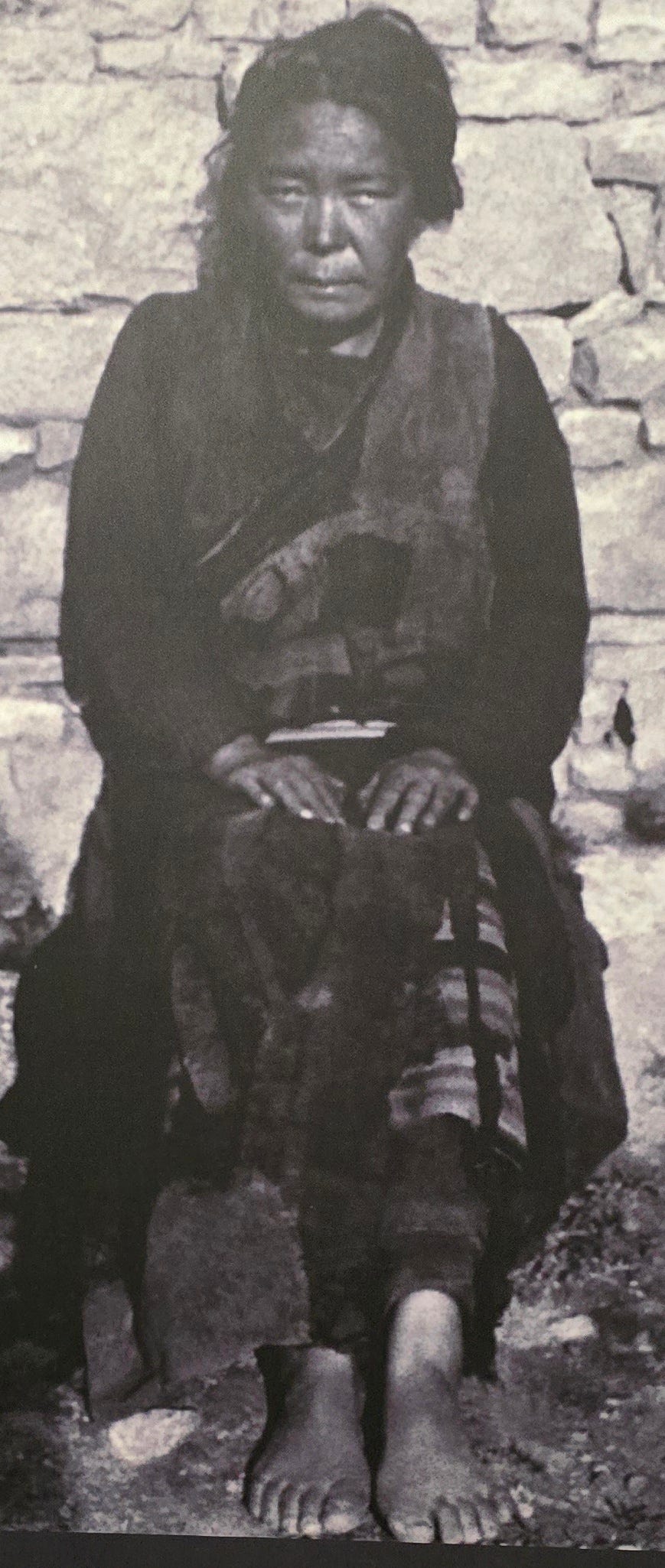
Image from the History Museum in Lhasa (photo Felix Abt)
In moments like these, one understands why the People’s Liberation Army bears exactly this name. For those who lived in this darkness, it truly was light — a liberation that changed their entire lives.
Having emerged from bondage, Tibetans today live as free Chinese citizens. They enjoy a modest but noticeably growing prosperity. The gold remained untouched in the palace — but the state has invested billions in roads, housing, schools, clinics, and overcoming bitter poverty.
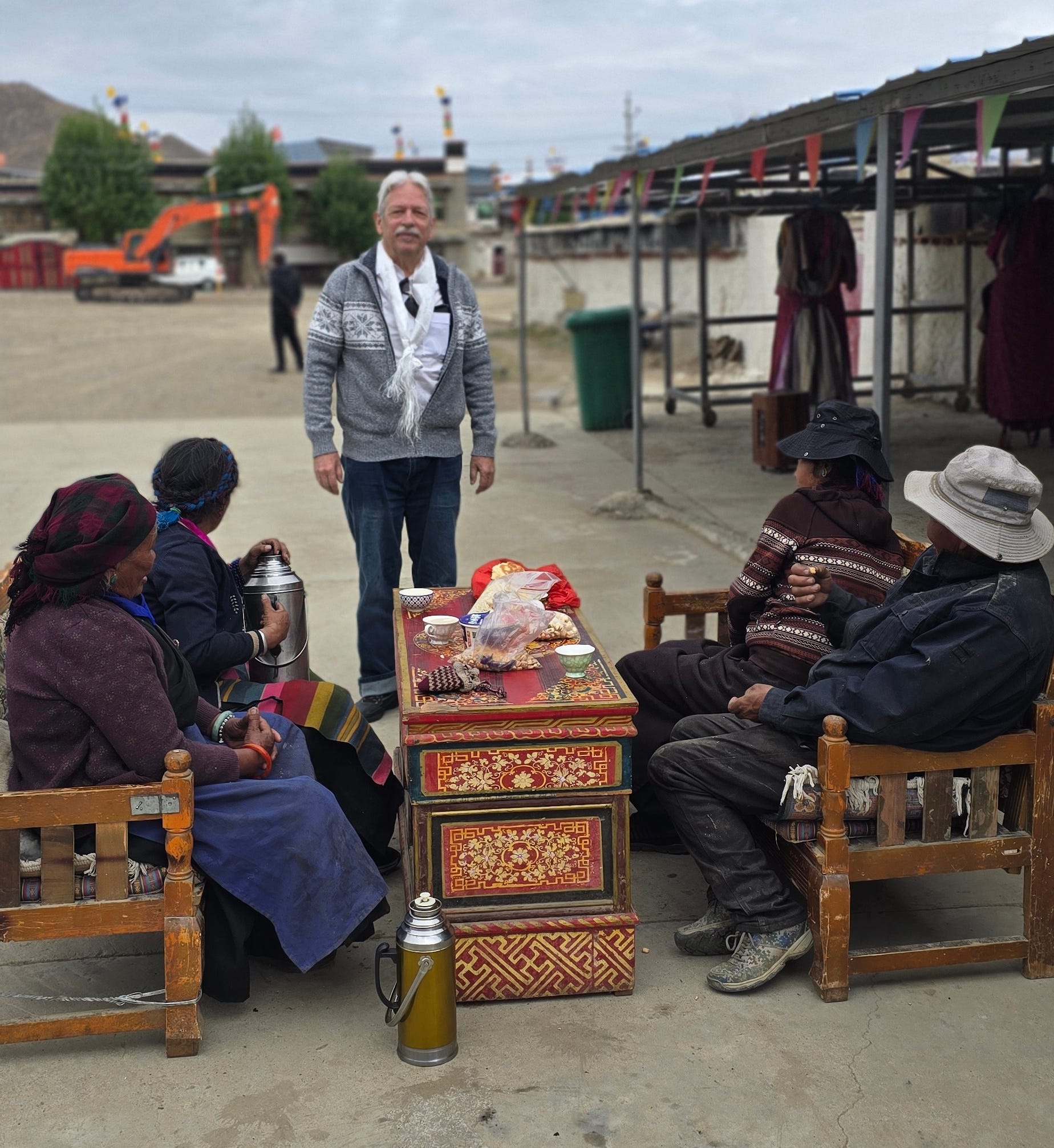
The author speaking with Tibetans (photo Felix Abt)
Today, life is pulsing once more in Lhasa and throughout Tibet. And in the faces of its people, one perceives something truly precious: calm, dignity, and a quiet, heartfelt contentment.
▪ ▪ ▪
P.S.
In the continuation of this travel report, I will focus on the culture and history of Tibet — including the Tibetan woman who invited me into her remote home far from the capital. She lives with three husbands and has five children. At school, they learn not only Mandarin, the Chinese national language, but also their own mother tongue. Like most Tibetan families, they continue to actively preserve their religion and cultural traditions.

Such observations — and countless more like them — clearly demonstrate that the Western accusation of “cultural genocide” in Tibet is nothing but a grotesque lie.
Those who voice this accusation most loudly are often the same people who remain conspicuously silent in the face of actual cultural suppression. Take Ukraine, where millions of Russian-speakers have seen their language restricted, Russian-language books removed from libraries, Russian-language media shut down, and the Russian Orthodox Church heavily constrained.
Or consider France, where regional languages such as Basque, Alsatian, Corsican, Breton, and Occitan have no official status. They are barred from administrative use and banned from classrooms under national law. In the past, students were even forced to wear a “necklace of shame” if they dared to speak their mother tongue.
A similar practice existed in the United Kingdom: in Wales, schools used the “Welsh Not,” a token of shame hung around a child’s neck if they were heard speaking Welsh.
France’s official policy of linguicide produced stark results: according to its own statistics, regional languages such as Corsican and Breton declined from being spoken in 70–80% of local families at the end of World War I to under 10% by the late 20th century. Even in Alsace, the most resilient of these regions, the intergenerational transmission of Alsatian fell from roughly 70% to just 18% within only two generations.
▪ ▪ ▪
Read my related articles addressing Western stereotypes of China:
Long before the West imagined equal opportunity, China practiced it. The Tang civil service offers lessons for a world torn between Chinese meritocracy and Western plutocracy.
Wu Zetian: The Woman Who Rewrote China’s Rules
From palace intrigues to civil service exams, China’s only female emperor left a legacy that fueled the nation’s rise and still shapes women’s paths to leadership today.
Why India Can’t Catch Up to China—Yet
Rapid growth hasn’t closed the gap, but strategic partnerships could give India a turbo boost
China’s Shadow Banking Paradox: The System Everyone Fears—but Without Which China Cannot Live
It’s the massive ticking bomb that everyone can see. Yet, somehow, it hasn’t exploded.
The Quiet Rise of a New Global Payments System
BRICS, CIPS, and the gradual end of the dominance of the US dollar – a fundamental change that the West apparently overlooks – to its own detriment.
Revelation Story: How Germany and Japan Tried to Derail China’s High-Speed Rail Rise
A behind-the-scenes look at sabotage, supply blockades, and how China turned crisis into technological independence.
Inside the Secret Battle Between a Rising China and a Declining Superpower
Past the Propaganda: Xinjiang as It Really Is
An on-the-ground account challenging stereotypes — meeting Uyghurs, experiencing traditions, and seeing a region beyond the narrative
The Collapse of the “China Collapse” Narrative
I spent several weeks in China, expecting to find signs of a current or impending crisis. Instead, I witnessed a future taking shape at breakneck speed.
Rerouting Global Trade: The Rise of the Eurasian Corridor
Bypassing US Maritime Chokepoints Through Steel and Strategy
China’s Breakthroughs Are Ending Diseases—And Threatening Big Pharma’s Business Model
Meritocracy and shared prosperity drive innovations that Western healthcare systems can’t match.
Oligarchic Rule in the West Contrasts with People’s Representation in Vietnam and China
Vietnam and China Expose the Rot at the Heart of Western “Democracy”
From Guerrilla Wars to Victory Parades: Why China, Russia, and North Korea Stand Together Today
The forgotten role of Chinese and Korean resistance in WWII explains today’s alliances—and why the West keeps misreading them.
China’s Silent Checkmate: How Rare Earths Are Crippling Israel’s Missile Defense
Iran’s missiles are flying. Israel’s interceptors are dwindling. But the real game-changer? China’s hold on rare earths.
Debunking the Myth of China’s “Social Credit” Dystopia
Behind the West’s most persistent political fantasies — and why the truth is more bureaucratic than Orwellian.
Two Competing Systems: China’s Subways Serve People — Western Subways Fail Them
Subways Don’t Lie: China Rising, West Declining
Revelation: Repressive China Suppressed A Popular Toy Bear — Or Was It the Western Fake News Media?
How the Media Misuse Sport as a Propaganda Weapon in the Information Warfare
Western Media Rely on Dubious Sources in Smears Directed Against China
▪ ▪ ▪
Felix Abt is an entrepreneur, author and travel blogger living in Asia.
With his articles, he tries to make a modest contribution to debunking the omnipresent propaganda of the mainstream media for those who don’t have the time (and that’s most people) to do the research to see through it.
▪ ▪ ▪
Thanks for reading Felix Abt’s Substack! Subscribe for free to receive new posts and support my work.
If you found this piece valuable, please consider supporting my work with a monthly or yearly Substack subscription. Your support helps make in-depth research and independent writing like this possible—and allows me to keep bringing you more stories that go beyond the headlines.